Browser Tweaks for Efficient Data Scraping in Competitive Analysis Tools Paired with Privacy Protocols for Solo Analysts
Felix Schwarz · Sep 7, 2026
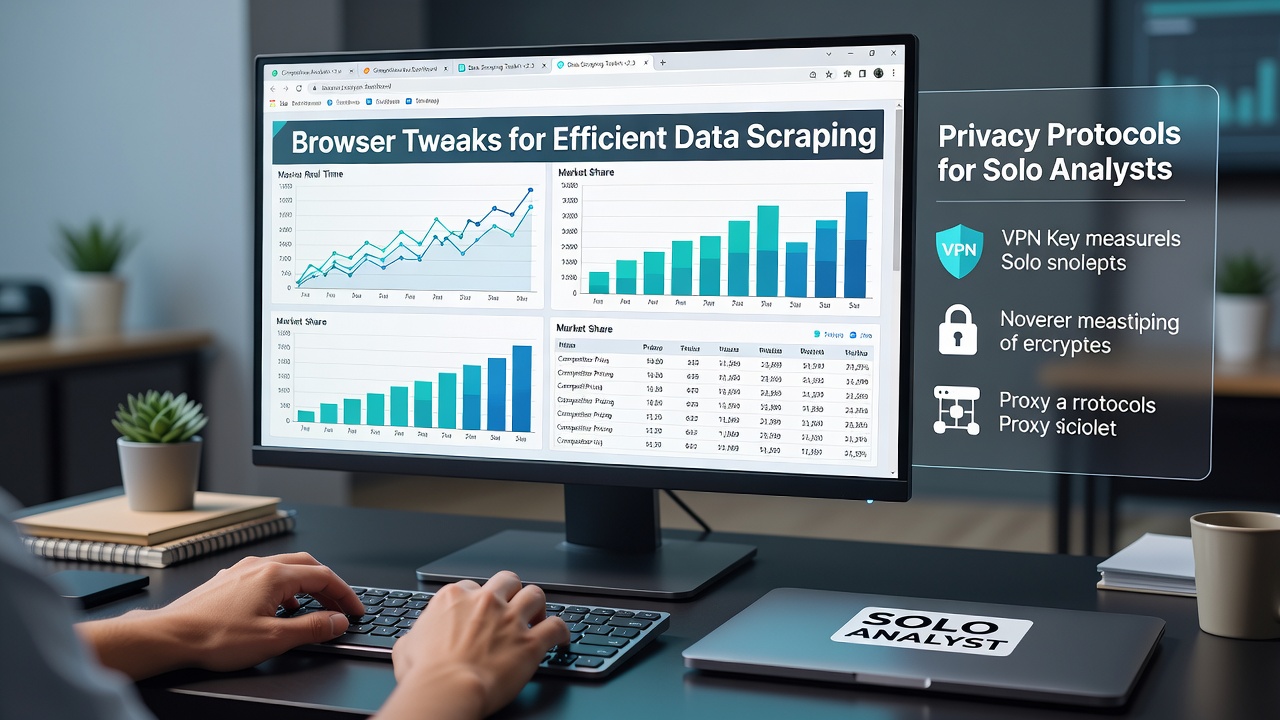
Browser Tweaks for Efficient Data Scraping in Competitive Analysis Tools Paired with Privacy Protocols for Solo Analysts
Analysts working alone often adjust browser parameters to gather market intelligence while maintaining data protection standards, and these modifications support competitive analysis tools that process large volumes of publicly available information. Research indicates that targeted changes to user agents, header configurations, and request throttling reduce detection risks during automated collection sessions. Data from industry reports shows that solo practitioners who implement consistent rotation of browser fingerprints achieve higher success rates in sustained operations compared to unmodified setups.
Core Browser Adjustments for Scraping Efficiency
Browser extensions designed for header modification allow users to alter accept-language fields and referrer data on the fly, which helps competitive analysis platforms blend requests with organic traffic patterns. Those who study these tools note that combining extensions with built-in developer console scripts enables precise control over JavaScript execution timing, preventing overload on target servers during peak data pulls. According to findings from the Federal Trade Commission, such practices align with guidelines that emphasize minimal disruption to online services when collecting business intelligence.
Cache clearing routines paired with session isolation features maintain consistent performance across multiple analysis cycles, while proxy integration through browser flags routes traffic through distributed endpoints to distribute load. Observers note that analysts who schedule these tweaks at regular intervals report fewer interruptions in long-running competitive scans, and the approach scales effectively for individuals managing several projects simultaneously.
Privacy Protocols Integrated with Scraping Workflows
Encryption layers applied at the browser level, such as those using WebRTC controls and DNS-over-HTTPS settings, shield identifying details during data extraction for market comparison tasks. Research from Canadian privacy authorities highlights how these protocol adjustments limit exposure of IP metadata when solo analysts cross-reference competitor pricing and product details. The combination supports tools that store results locally rather than transmitting raw datasets through unsecured channels.
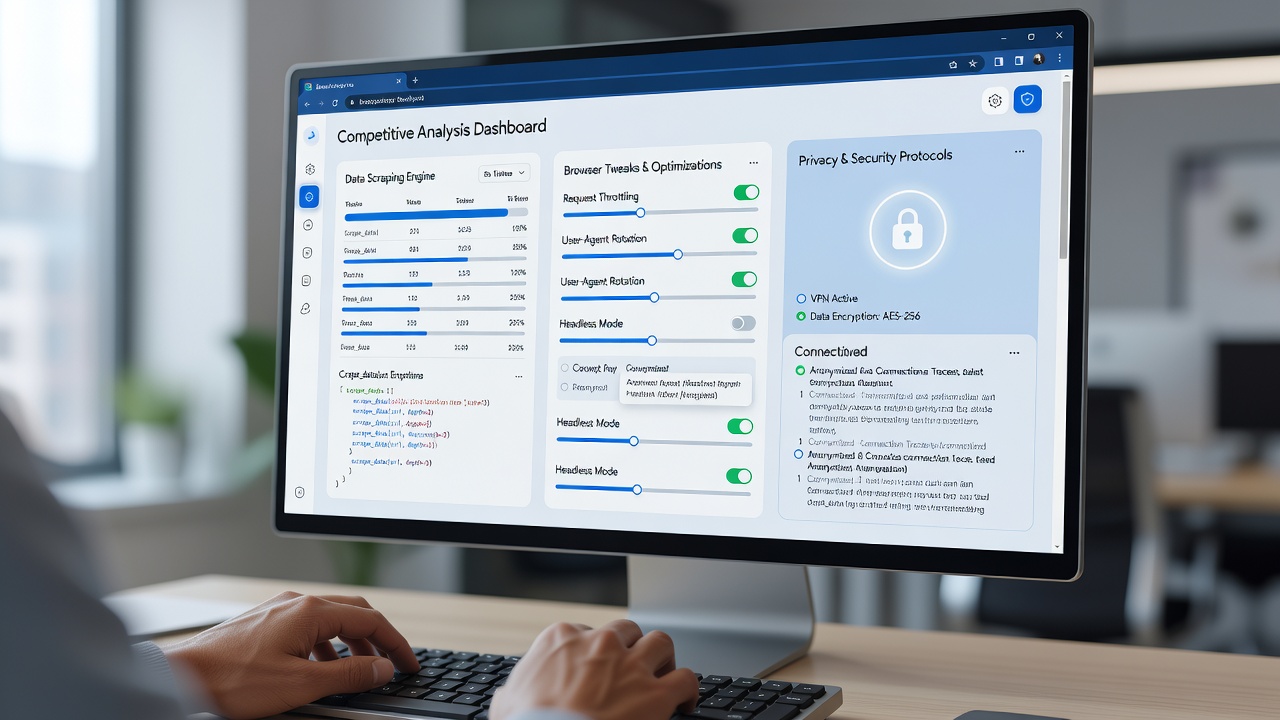
Multi-account container features separate scraping sessions from personal browsing activity, which reduces cross-contamination of cookies and local storage that could compromise ongoing research. Experts have observed that pairing these containers with regular certificate pinning checks adds another verification step against man-in-the-middle attempts common in high-volume data environments. Figures from academic studies on digital privacy reveal that analysts incorporating these steps maintain compliance with evolving data handling expectations across different jurisdictions.
Practical Implementation in Competitive Analysis Tools
Scripted automation within browsers leverages APIs to trigger incremental data fetches, allowing competitive analysis software to update dashboards without manual intervention each cycle. Those who've examined workflow integrations find that adjusting throttle rates based on server response headers prevents rate-limit triggers, and the method integrates smoothly with spreadsheet exports for further offline review. And because these tweaks operate at the client side, they complement rather than replace backend filtering in analysis platforms.
Regular audits of installed extensions ensure only necessary components remain active, which streamlines memory usage during extended scraping runs for niche market comparisons. Data shows that solo analysts who document their configuration changes can replicate successful setups across different devices, and this consistency proves valuable when scaling from one project to several concurrent evaluations.
Conclusion
Browser-level modifications continue to evolve alongside regulatory frameworks that govern data collection practices, providing solo analysts with methods that balance operational speed and protective measures. The documented approaches support efficient processing within competitive analysis environments while respecting established privacy boundaries across regions. Continued monitoring of protocol updates remains essential for maintaining these balanced workflows.