Exploring Microcontroller Programming Techniques for Custom Environmental Monitoring Solutions in Remote Educational Platforms
Zara Russell · Nov 2, 2026
Exploring Microcontroller Programming Techniques for Custom Environmental Monitoring Solutions in Remote Educational Platforms
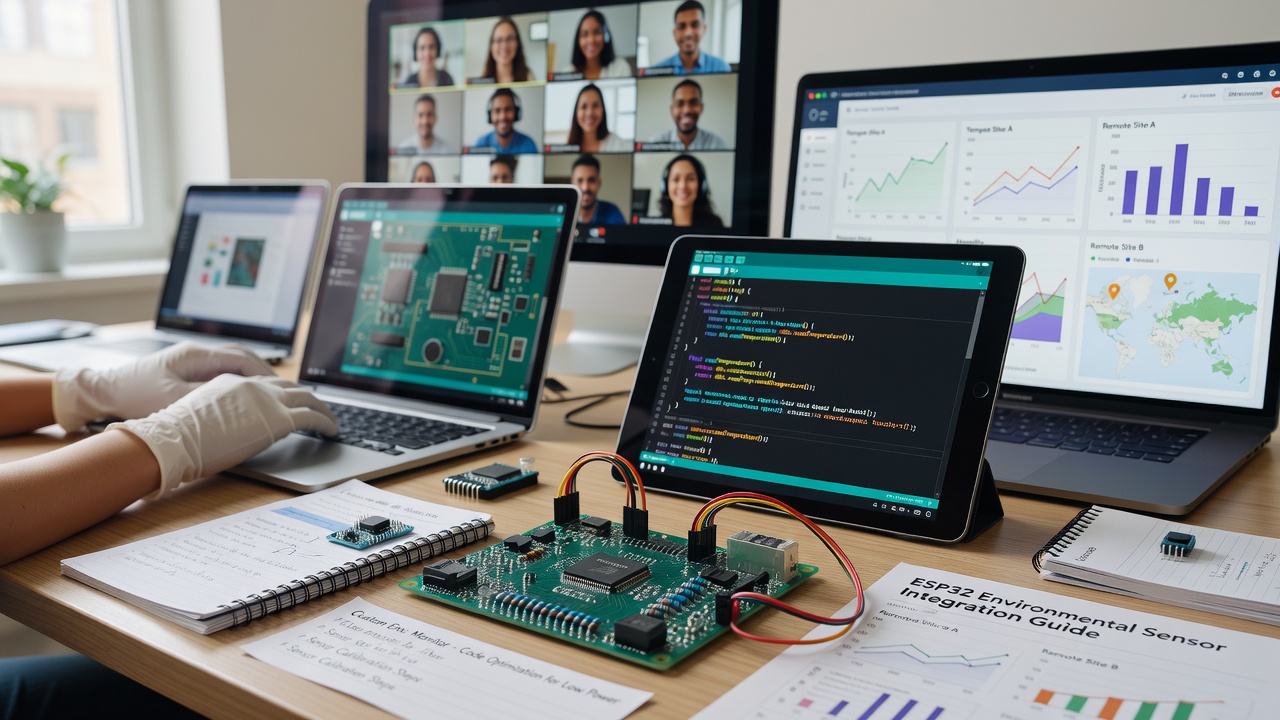
Programming microcontrollers for environmental monitoring involves selecting hardware like ESP32 or Arduino boards, then writing code that reads data from sensors measuring temperature, humidity, soil moisture, and air quality before transmitting results over wireless networks to centralized platforms used in remote education settings.
Core Programming Approaches and Languages
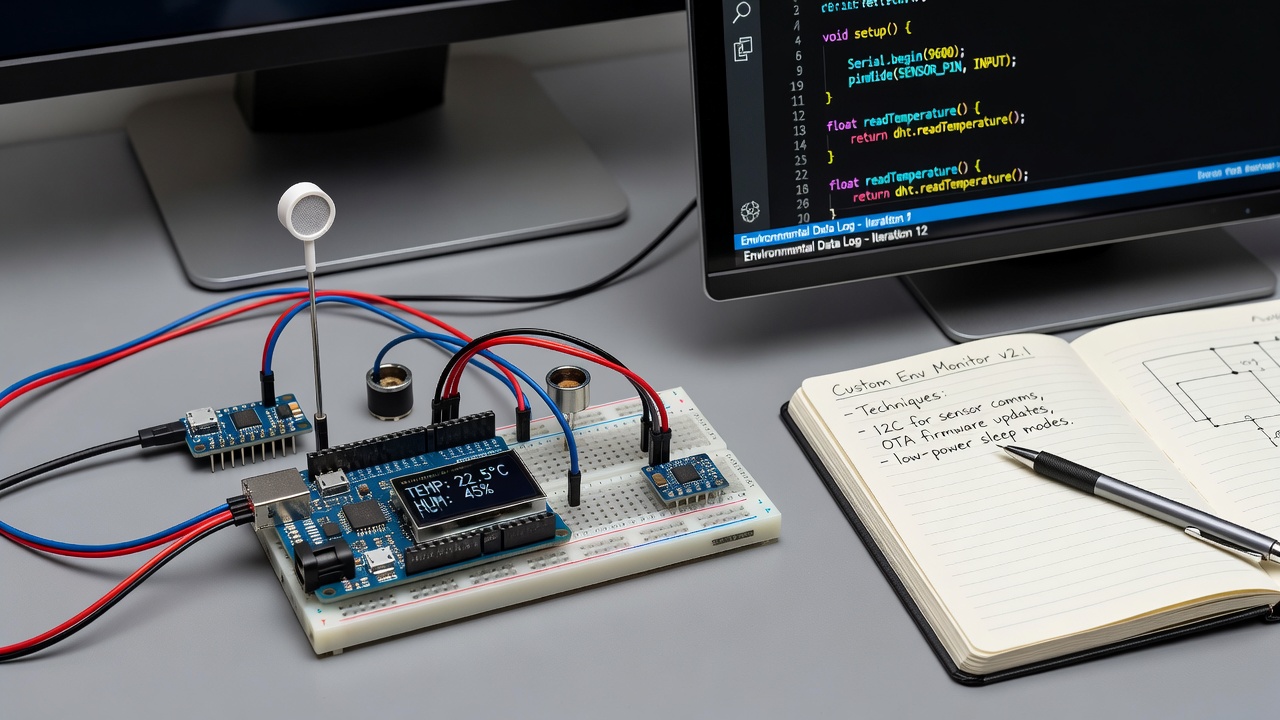
Developers often start with C++ on platforms such as Arduino IDE because it offers direct hardware control and low memory overhead, while MicroPython provides an alternative for those who prefer Python syntax and rapid prototyping in educational contexts where students learn coding alongside data collection. Research indicates that combining interrupt-driven routines wth sleep modes extends battery life in off-grid locations, allowing devices to sample environmental variables at intervals of five to fifteen minutes without draining power sources quickly.
Code structures typically include libraries for specific sensors like DHT22 or BME280, followed by data formatting into JSON packets that upload via Wi-Fi or LoRaWAN to cloud dashboards accessible to students and instructors in distant regions.
Sensor Integration and Data Handling Techniques
Custom solutions require calibration routines that account for sensor drift over time, and programmers implement moving average filters plus threshold checks to reduce noise in readings from remote sites where temperature swings affect accuracy. According to findings shared by the National Oceanic and Atmospheric Administration, consistent calibration protocols improve long-term data reliability in field deployments by up to thirty percent when compared with unadjusted units.
Storage on SD cards serves as a backup when connectivity drops, and timestamp synchronization through RTC modules ensures chronological accuracy for later analysis in classroom projects that compare local conditions with regional trends.
Wireless Transmission and Power Management
Wireless protocols range from MQTT over Wi-Fi for areas with existing infrastructure to LoRa for longer-range transmission in wilderness educational camps, and firmware often includes retry logic plus compression to handle intermittent signals without data loss. Power management routines activate deep sleep states between readings while monitoring voltage levels to trigger low-power alerts before batteries fail during extended monitoring periods.
Observers note that solar charging circuits paired with supercapacitors maintain operation through cloudy stretches, supporting continuous environmental tracking that feeds real-time visualizations in online learning modules.
Applications in Remote Educational Platforms
Educators integrate these monitoring systems with platforms like Moodle or custom web apps so students can query live sensor feeds, run statistical analyses, and generate reports on topics such as climate patterns or pollution levels. Data pipelines feed into interactive maps and graphs that update automatically, giving learners hands-on experience with IoT concepts without requiring physical presence at monitoring sites.
Case examples include school networks in rural Australia where microcontroller arrays track bushfire risk indicators and stream results to participating classes across multiple time zones, while similar setups in Canadian provinces monitor permafrost thaw and share findings through university-hosted portals.
Security and Scalability Considerations
Secure communication uses TLS encryption for data in transit along with unique device certificates that prevent unauthorized access to educational databases, and over-the-air update mechanisms allow remote firmware patches without site visits. Scalability comes from modular code design that lets additional sensors join existing networks through simple configuration files rather than full reprogramming.
Studies from Environment and Climate Change Canada highlight how standardized data formats across multiple microcontroller nodes enable aggregation of regional datasets that support larger research efforts while remaining accessible to student groups.
Future Developments Scheduled for Late 2026
Events planned for November 2026 include workshops at international education technology gatherings where participants will test new microcontroller variants with built-in AI accelerators for on-device anomaly detection in environmental readings. These sessions aim to demonstrate how updated programming frameworks reduce latency between sensor input and alert generation for remote learning communities.
Conclusion
Custom environmental monitoring built around microcontroller programming continues to expand options for remote educational platforms by delivering reliable, low-cost data streams that connect field observations directly to classroom analysis. Continued refinement of power efficiency, wireless reliability, and secure data handling supports broader adoption across diverse geographic and instructional settings.