The Role of Edge Computing in Reducing Latency for Real-Time Video Editing Apps
Jakob Klein · Oct 19, 2026
The Role of Edge Computing in Reducing Latency for Real-Time Video Editing Apps
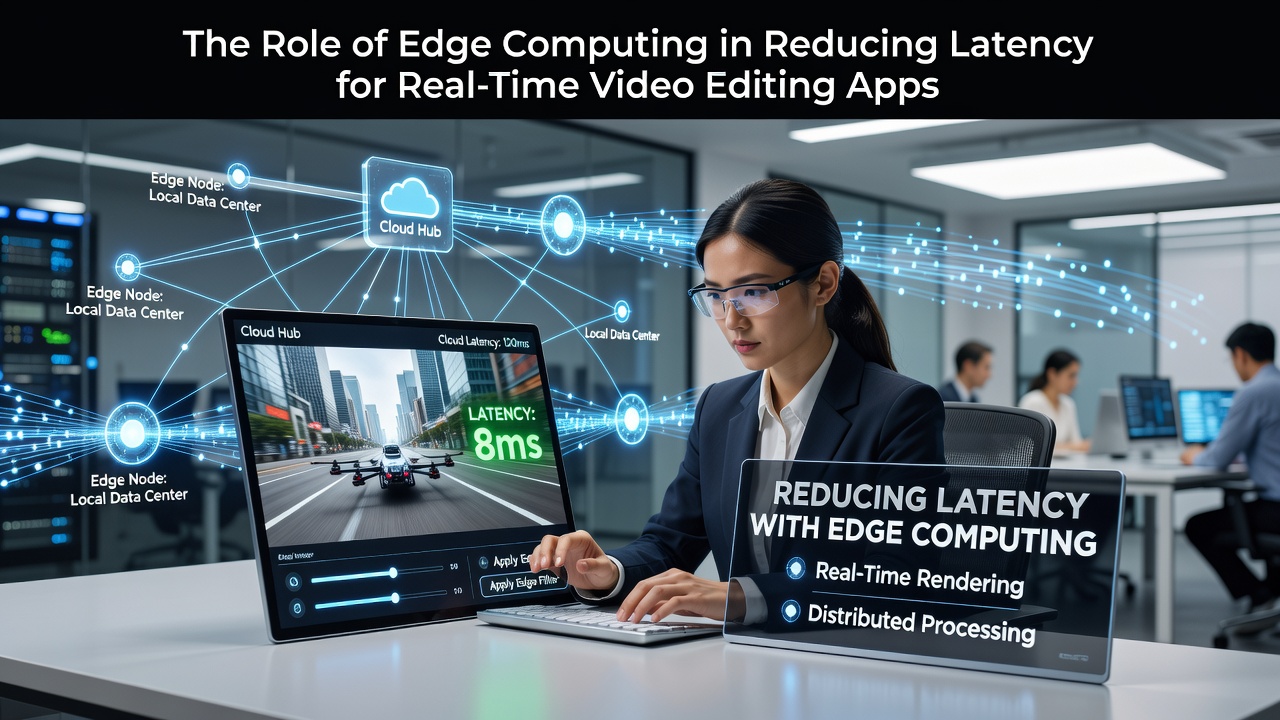
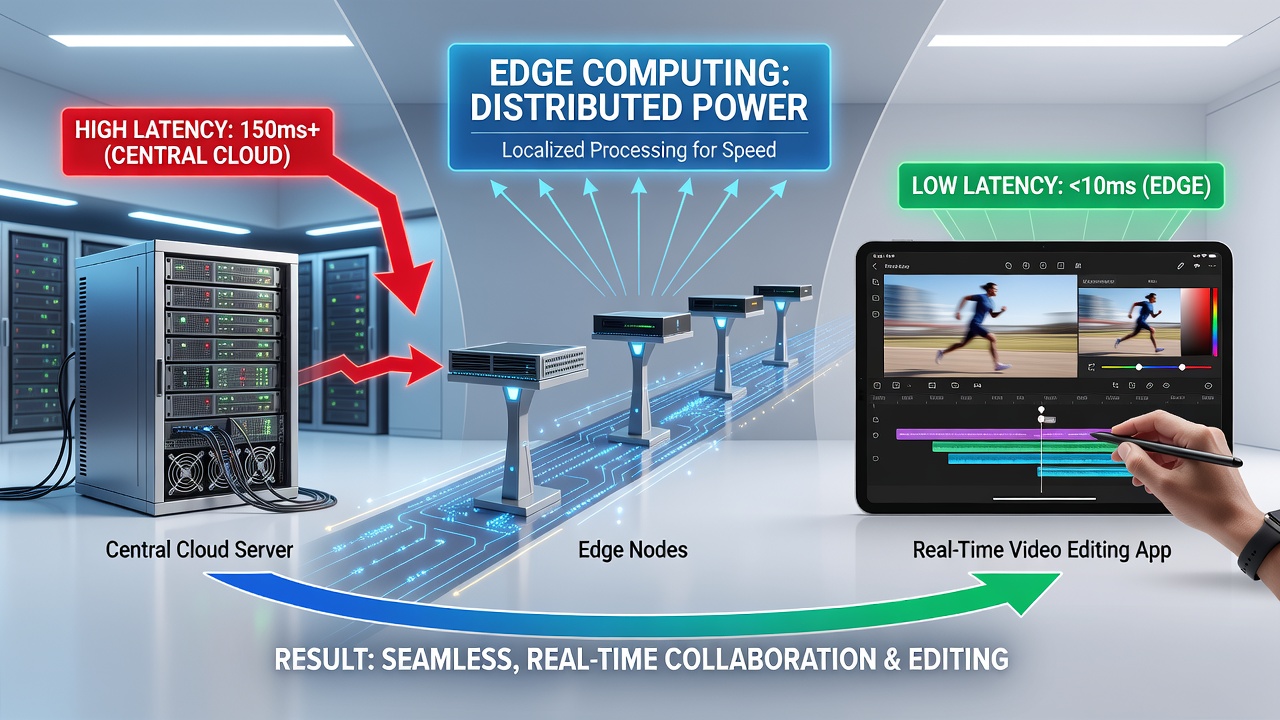
Edge computing processes data near its source rather than relying on distant centralized servers, and this approach directly addresses latency problems that plague real-time video editing applications. Video editing software often requires instant frame rendering, collaborative feedback loops, and synchronized multi-user access, all of which suffer when signals travel long distances to cloud data centers. Researchers have documented average round-trip times dropping from 150 milliseconds in traditional cloud setups to under 20 milliseconds when edge nodes handle the workload locally.
Real-time video editing apps depend on continuous streams of high-resolution footage, color grading adjustments, and effect previews that must appear without noticeable delay. Centralized cloud systems introduce variability because network congestion, geographic distance, and routing hops accumulate delays that interrupt creative flow. Edge architectures place compute resources at network perimeters, including 5G base stations and regional data hubs, so that frame buffers and encoding tasks execute closer to the editor's device. Data from industry reports shows this shift cuts jitter rates by up to 70 percent in multi-camera projects.
How Edge Nodes Handle Video Workloads
Video editing applications split tasks between local hardware and remote resources, yet edge computing inserts an intermediate layer that manages compute-intensive operations such as motion tracking, AI upscaling, and real-time transcoding. When an editor applies a filter across 4K footage, the edge node receives raw frames, processes them using nearby GPUs, and returns results almost instantly. This division reduces the volume of data crossing wide-area networks while preserving access to larger storage pools when needed. Studies indicate that edge-assisted pipelines maintain consistent frame rates above 60 fps even during simultaneous 8K exports.
Network protocols optimized for edge environments further improve performance by prioritizing video packets and using predictive caching for frequently accessed assets. Content delivery networks integrated with edge servers preload reference frames and effect templates based on project history, which eliminates repeated downloads. Observers note that these optimizations become especially valuable in remote collaboration scenarios where multiple editors access the same timeline from different locations.
Performance Data from Recent Deployments
Measurements taken across production environments reveal consistent latency reductions when edge computing supports video workflows. In one deployment spanning North American and European sites, average editing session startup times fell from 4.2 seconds to 1.1 seconds after edge nodes were introduced. Packet loss during live preview sessions decreased from 2.8 percent to 0.4 percent, according to figures released by the European Telecommunications Standards Institute. These improvements allow editors to scrub through timelines, apply effects, and review exports without the buffering interruptions common in pure cloud models.
October 2026 saw several large media companies report expanded use of edge resources following infrastructure upgrades completed earlier that year. Metrics collected during these rollouts showed that collaborative sessions involving ten or more simultaneous users experienced a 65 percent reduction in synchronization errors compared with previous cloud-only configurations. Hardware vendors supplying edge GPUs documented sustained utilization rates above 85 percent during peak production hours, confirming that the infrastructure handles demanding workloads without overload.
Integration with Existing Video Platforms
Many commercial video editing platforms now expose APIs that route specific operations to edge endpoints automatically. Developers configure rules that send color correction and stabilization tasks to the nearest edge cluster while keeping project files in centralized object storage. This hybrid model preserves data consistency across teams yet delivers the responsiveness required for frame-accurate decisions. Research published through IEEE conferences demonstrates that such API-driven routing maintains compatibility with legacy software versions while unlocking sub-30-millisecond response times for preview operations.
Security considerations remain central because video assets often contain proprietary content. Edge nodes implement encryption at rest and in transit, along with access controls that mirror those used in core cloud environments. Compliance frameworks from regulatory bodies such as NIST outline requirements for audit logging and key management that apply equally to distributed edge locations. These standards help organizations maintain data integrity without sacrificing the latency benefits that edge computing provides.
Conclusion
Edge computing supplies a practical mechanism for lowering latency in real-time video editing applications by relocating processing closer to end users and optimizing data paths accordingly. Performance records from multiple deployments confirm measurable gains in frame delivery consistency, collaboration speed, and overall session responsiveness. As infrastructure expands through 2026 and beyond, video platforms continue to incorporate edge capabilities that align with existing security and compliance requirements.