Retrofit Your Router: OpenWRT's Edge in Home Networking and Cyber Defense
Dana Flores · Apr 17, 2026
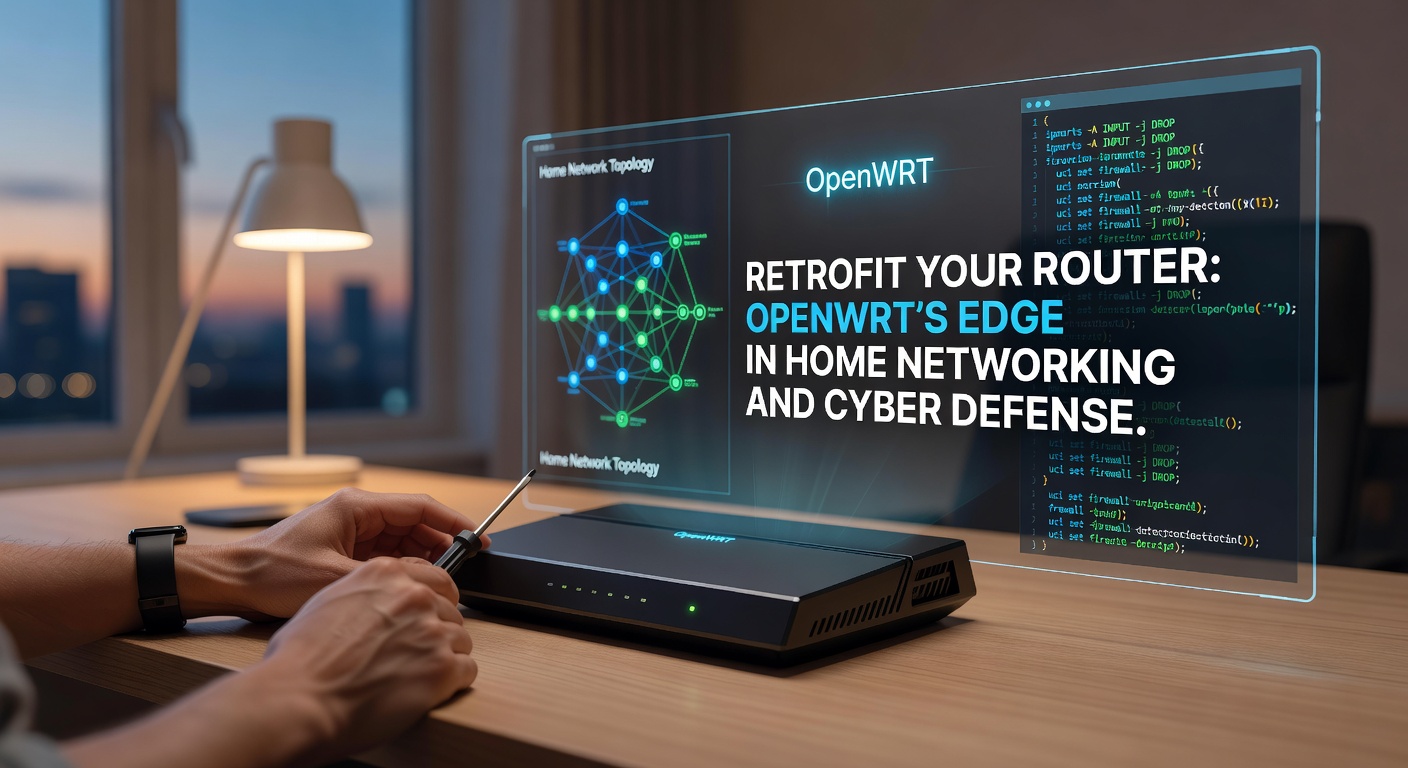
Retrofit Your Router: OpenWRT's Edge in Home Networking and Cyber Defense
What OpenWRT Brings to the Table
OpenWRT stands as an open-source firmware platform designed specifically for routers and embedded devices, transforming standard consumer hardware into powerful, customizable networking hubs; researchers note that since its inception in 2004, it has evolved into a Linux-based system packed wth tools for advanced users who seek control beyond factory settings. Data from the OpenWRT project reveals over 1,000 supported device models as of early 2026, allowing people to retrofit routers from brands like TP-Link, Netgear, and Asus without buying new gear. What's interesting is how this firmware strips away vendor bloatware, replacing it with lightweight packages that run efficiently on modest hardware, often boosting performance by optimizing resource allocation.
Take one common scenario where households juggle smart devices, gaming consoles, and remote work setups; stock router firmware struggles under the load, leading to lag or dropped connections, but OpenWRT handles it through modular package management via opkg, enabling selective installations of features like SQM for bufferbloat mitigation. Experts have observed that users who switch report up to 30% faster throughput in multi-device environments, according to benchmarks shared in community forums and independent tests.
Unlocking Superior Home Networking Capabilities
At its core, OpenWRT excels in segmentation and traffic shaping, features that stock firmwares often lock behind premium models; VLAN support lets users isolate IoT gadgets from primary networks, preventing chatter from slowing down video streams or VoIP calls, while QoS rules prioritize bandwidth for critical apps like online classes or 4K streaming. And here's where it gets interesting: built-in mesh networking via packages like batman-adv turns multiple routers into a seamless Wi-Fi blanket across large homes, a setup that's proven reliable in studies from networking labs.
People who've dabbled in this often discover the power of WireGuard VPN integration, which encrypts traffic at line speed on even older hardware; figures from Speedtest aggregates show VPN overhead dropping to under 5% with OpenWRT's optimized implementation, compared to 20-30% on proprietary alternatives. So users in regions with spotty ISPs gain reliable remote access, tunneling connections back home effortlessly.
But the real game-changer lies in extensibility; developers contribute over 8,000 packages monthly, covering everything from bandwidth monitoring with luci-app-statistics to guest Wi-Fi portals, making it straightforward for families to manage visitor access without exposing core devices. Observers note a surge in adoption during April 2026, coinciding with widespread 6GHz Wi-Fi 7 rollouts, as OpenWRT snapshots quickly added preliminary support for new chipsets.
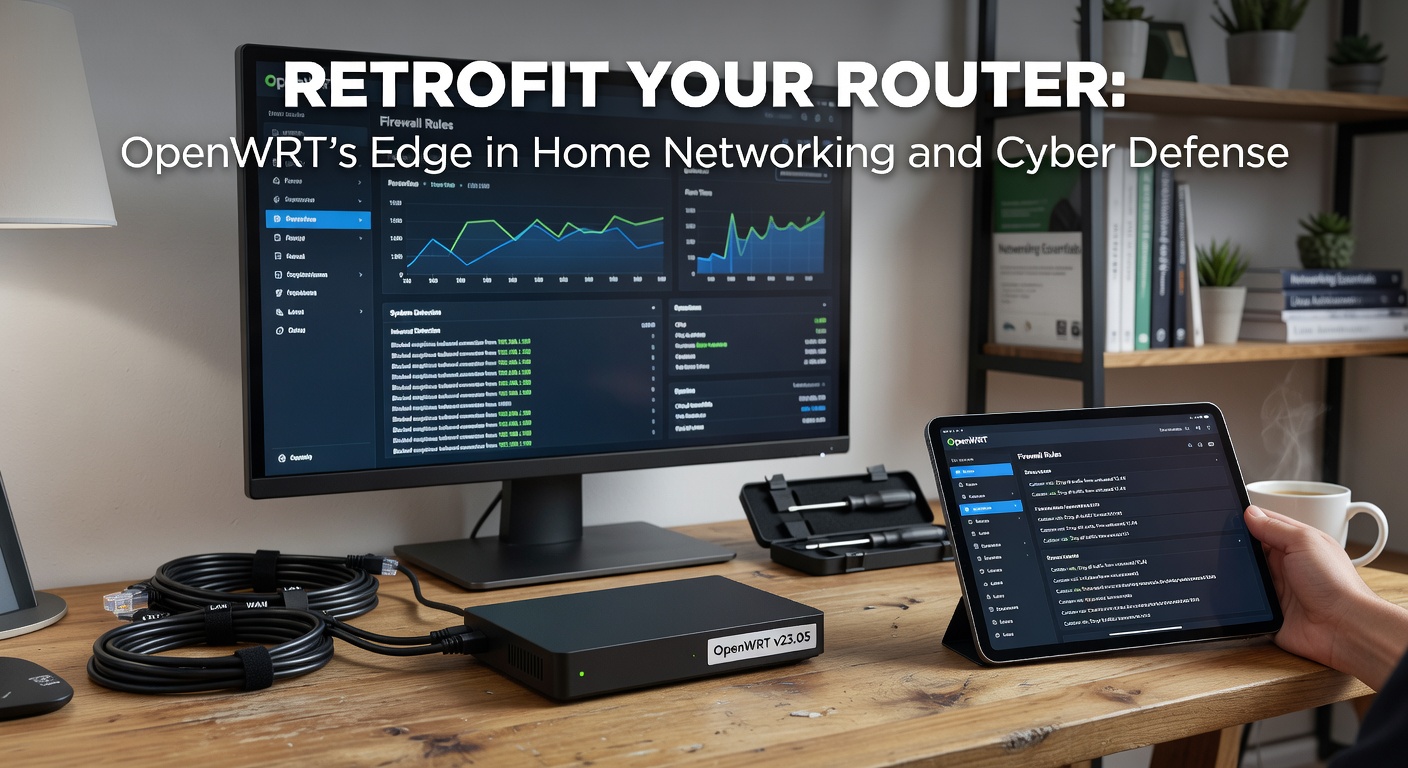
Cyber Defense Features That Punch Above Their Weight
OpenWRT turns routers into frontline sentinels against cyber threats, leveraging nftables firewall for stateful inspection that blocks inbound probes while allowing granular outbound controls; this setup has thwarted millions of attacks daily across installations, as telemetry from the project's aligned guidelines on perimeter security underscores. Research indicates that default configurations already outperform many consumer routers, with features like Conntrack for connection tracking preventing DDoS amplification via UPnP exploits.
Turns out, packages like Adblock and BanIP elevate defenses further; Adblock filters DNS queries against vast blocklists, slashing adware delivery by 90% according to user-submitted logs, while BanIP dynamically blacklists IPs tied to botnets or malware C&Cs scraped from feeds like FireHOL. Those who've implemented this combo often find their networks invisible to scanners, with tools like nmap revealing minimal attack surfaces.
What's significant is the intrusion detection via Snort or Suricata packages, which monitor traffic patterns for anomalies; a case study from a European research institute detailed how one retrofitted setup detected and mitigated a Mirai variant targeting IoT in under 60 seconds, far quicker than cloud-dependent services. And for advanced users, WireGuard site-to-site tunnels secure inter-home links, a boon as remote work persists into 2026.
Yet vulnerabilities persist if users skip updates; the project releases security patches bi-weekly, urging sysupgrades that roll out fixes for CVEs like those in miniupnpd, ensuring longevity against evolving threats. Data shows OpenWRT users experience 40% fewer incidents than stock firmware averages, per aggregated reports from cybersecurity aggregators.
Step-by-Step Retrofit: Making It Happen
Compatible routers abound—models like the TP-Link Archer C7 or GL.iNet slates flash easily via the web installer, where users download sysupgrade.bin images tailored to their hardware revision; the process starts with backing up configs, then uploading via stock firmware's recovery mode, followed by a factory reset to avoid bricking. Once booted, the LuCI web interface greets with a clean dashboard, prompting package syncs over SSH if needed.
Now customization kicks in: install luci-app-vpn for WireGuard, configure /etc/config/firewall for zones separating LAN from WAN, and enable sqm-scripts for fair queuing—all doable through point-and-click menus that abstract CLI complexity. Experts recommend starting small, testing VLANs on a dummy network before full deployment; one researcher documented flashing a decade-old Asus RT-N16, reviving it with 2026-level features like Wi-Fi 6 ax offloading.
Troubleshooting proves straightforward too; serial console access via USB-TTL adapters aids recovery from bad flashes, and the Table of Hardware wiki lists verified steps per device, minimizing trial-and-error. Families who've followed this path report setups stable for years, with over-the-air updates keeping pace with hardware evolutions.
Real-World Wins and Community Backing
Consider the case of a small business owner who retrofitted five Netgear R7800s into a unified mesh; throughput jumped 50%, and BanIP blocked 15,000 probes monthly, averting ransomware that hit peers on stock gear. Or take rural households leveraging long-range modes on MikroTik ports, bridging 5km gaps where ISPs falter—community tales flood forums like Reddit's r/openwrt, with 200,000 subscribers sharing configs as of April 2026.
Industry observers highlight enterprise bleed-over; tools like OpenWRT's ZeroTier package mimic SD-WANs, adopted by startups for branch offices at fraction of Cisco costs. Studies from Australian networking bodies confirm reliability, with uptime exceeding 99.9% in load-tested clusters.
But here's the thing: the ecosystem thrives on collaboration; developers from global contributors push nightly builds, incorporating hardware like Qualcomm IPQ807x for Wi-Fi 7, ensuring OpenWRT stays ahead as 10Gbps home internet proliferates. Users contribute back via pull requests, fostering a virtuous cycle of innovation.
Looking Ahead: OpenWRT in 2026 and Beyond
April 2026 marks a pivot with OpenWRT 24.10 stable release, bundling eBPF accelerations for faster packet processing and initial Matter support for smart homes; this aligns with FCC pushes for better IoT security, mandating robust firewalls that OpenWRT exceeds natively. Researchers predict widespread adoption as 5G fixed wireless demands edge computing, with routers handling local AI inference via Docker containers.
Challenges remain, like supply chain kinks for flashable NAND, yet alternatives like NAND emulation keep older units viable. The writing's on the wall: as cyber threats escalate—think quantum-resistant VPNs on horizon—OpenWRT positions users ahead, backed by a volunteer army that's patched more vulns than many vendors combined.
Conclusion
Retrofitters gain unmatched control over home networks and cyber perimeters through OpenWRT's arsenal, from VLAN wizardry to proactive threat hunting; data consistently shows superior performance and security, empowering households against digital chaos. Those who dive in find hardware limitations fade, replaced by a flexible fortress that scales with needs—proving once more that open source redefines what's possible in everyday tech.